


Services · Deep excavation · Excavation support
Excavation Support: Bored Pile, Anchored and Nailed Walls
Excavation support holds back the ground and neighbouring buildings around a deep excavation. Based in Istanbul, we build bored pile, anchored and soil nail shoring with our own equipment and have worked on excavations up to 30 m deep.
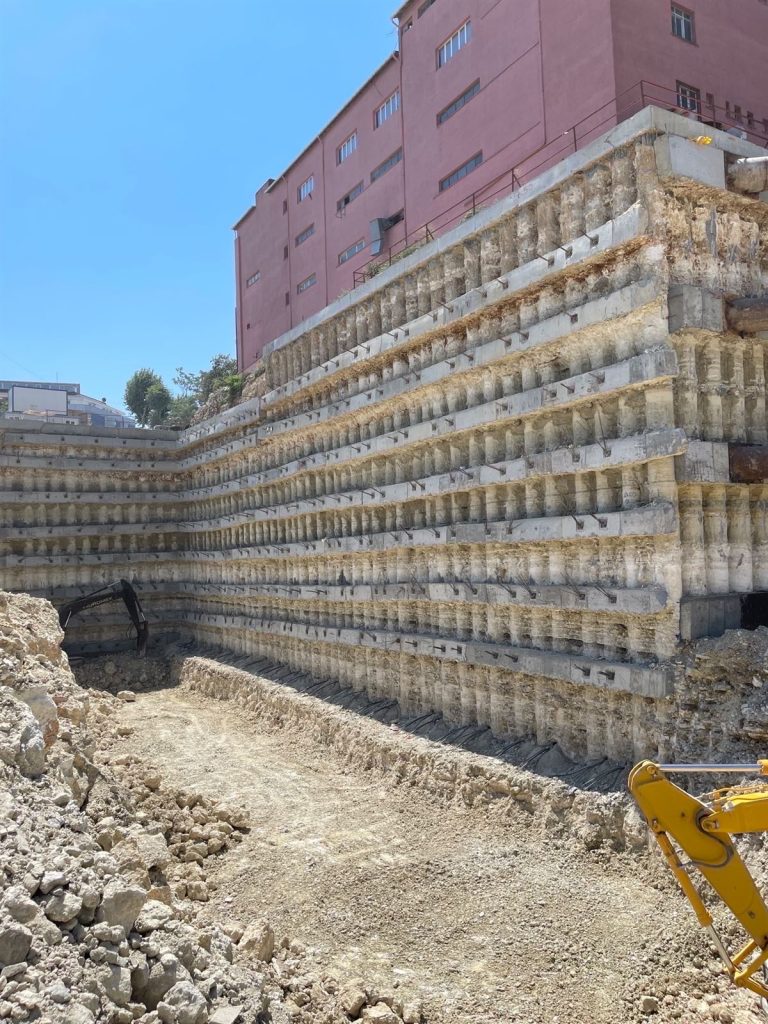
Excavation depth
Up to 30 m
Retaining wall
Bored piles up to Ø2000 mm
Ground anchors
30,000 m in Küçükçekmece
Water cut-off
Secant piles, jet grouting
Design
With our partner
Region
Türkiye and Central Asia
What is excavation support and when is it needed?
Excavation support stops soil and water from moving into an excavation. As a dig gets deeper, the ground wants to move sideways. That movement can crack neighbouring buildings and damage roads and services. For this reason, excavation support protects the riskiest stage of a project with deep basements.
In most cases the system is temporary, and its job ends once the basement floors are built. However, on some projects the wall also stays as part of the permanent structure.
When do you need excavation support?
- A dig next to an adjoining building
- A tight plot with no room for a slope
- Several basement levels and a deep excavation
- Groundwater above the excavation level
- A road, tunnel or utility along the edge
- Loose fill or soft clay
We also cover the options for tight sites in our guide to shoring on tight urban plots.
Excavation support systems: which method goes where?
No single system suits every site. The depth, the ground, the water and the adjoining buildings decide the choice together. The table below sums up the systems we meet most often.

| System | Suits | Watch for |
|---|---|---|
| Cantilever bored pile wall | Shallow digs, firm ground | Movement grows quickly with depth |
| Anchored bored pile wall | Deep digs, wide excavations | Anchors run under the neighbouring plot |
| Propped wall (struts) | Plots with no anchor permission | Struts take up space inside the dig |
| Soil nails and shotcrete | Ground that stands briefly, unloaded slopes | Not suitable close to adjoining footings |
| Secant pile or jet grout wall | Sites with high groundwater | Pile joints must be watertight |
Each method has its own page: bored piles, ground anchors, soil nailing, shotcrete and jet grouting.
How do you choose an excavation support system?
First, we read the site investigation and the borehole logs. Then we compare the options with our design partner. After all, the option that looks cheapest on paper can turn out to be the most expensive on site.
- Depth: As depth grows, a cantilever wall stops being enough and anchors or props are needed.
- Ground: Clay calls for long anchors, and loose fill calls for cased drilling.
- Groundwater: Water above excavation level calls for a watertight wall.
- Adjoining buildings: Footing level and condition set the movement limit.
- Neighbour permission: Anchors run under the next plot, so they need consent.
- Time and access: Narrow streets, working hours and rig access all affect the method.
Who designs the excavation support?
Our partner engineering practice prepares the design. Meanwhile, we use our site experience to check that the design can be built. Also, where a design already exists, we review it against the site. See our geotechnical design service.
How is an anchored shoring wall built?
We build the wall and dig in stages. The sequence below applies to an anchored bored pile wall.
- Investigation and design: We complete the site investigation with our partner and finalise the design.
- Platform and setting out: We build a working platform and mark the pile positions.
- Wall construction: We drill the bored piles and pour the concrete by tremie pipe.
- Capping beam: We trim the pile heads and tie the wall together with a capping beam.
- Staged dig and anchors: At each stage we drill, grout and stress the anchors.
- Facing: We cover the gaps between piles with shotcrete.
- Monitoring: We track movement by inclinometer with our partner.
- After the basement: We release the anchors as the design requires once the floors are up.
Our rule on site: we never dig below an anchor row until that row is complete and stressed. Digging early puts a load on the wall that the design did not allow for.
You can see our deep excavation in Florya in the short video below. However, the second video may include sample footage used for education.

Excavation support projects we have completed
We completed the projects below as Fen Zemin & İnşaat, with our own team. The quantities come from our site records.
200 Ø80 cm bored piles (6,000 m) and 800 ground anchors (30,000 m). A multi-row anchored wall in clay.
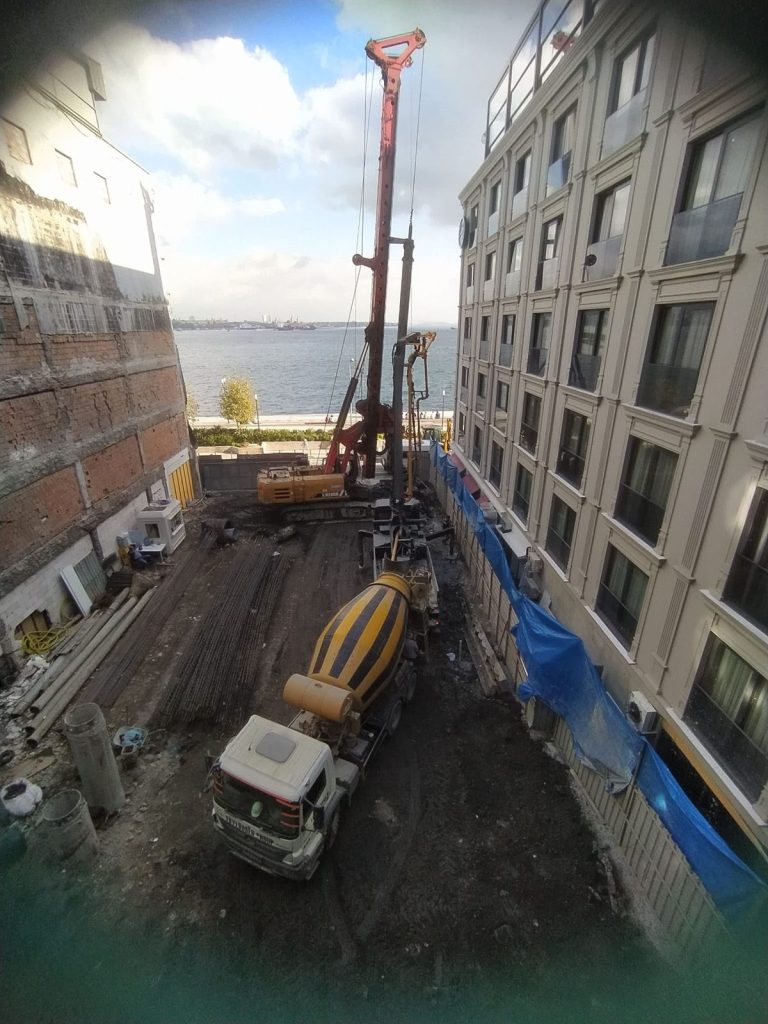
100 Ø65 cm secant bored piles and 800 jet grout columns. The foundation sat about 4 m below sea level.
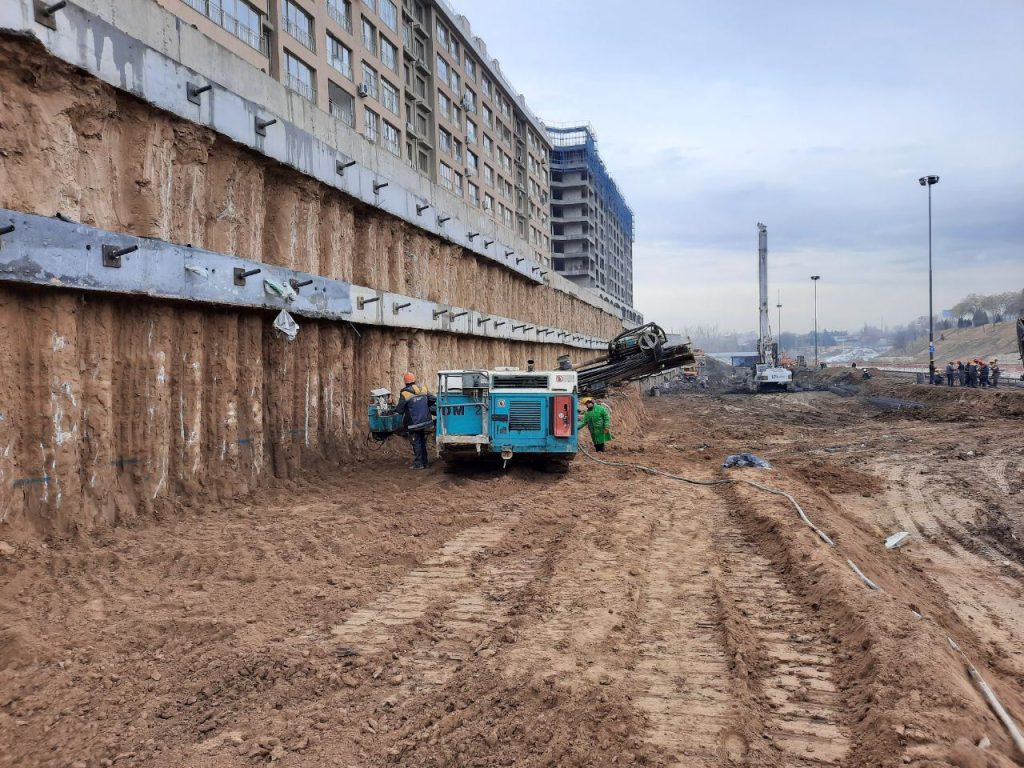
Tashkent residential and commercial projects
About 10,000 m of ground anchors for bored pile walls on the Metropol, Pushkin, Befit and Seul projects.
We list the projects our founder worked on in earlier roles in a separate section.
What affects the cost of excavation support?
Depth and ground conditions drive the cost more than anything else. For that reason, we do not give a single figure over the phone. Instead, we review the site investigation and the design and prepare a quotation based on quantities.
- Wall type, and pile diameter, length and spacing
- Number of anchor rows, anchor length and capacity
- Groundwater and watertightness needs
- Shotcrete and capping beam quantities
- Rock drilling and casing
- Mobilisation, site access and working hours
We explain ways to bring the cost down in our guide to reducing shoring costs.
What to send for an excavation support quote
- Site investigation report and borehole logs
- Site layout and number of basement levels
- Excavation depth and any existing design
- Condition of adjoining buildings and site access
- Target programme
Excavation support: frequently asked questions
We have grouped the questions we receive by who asks them. If yours is not here, call us or write through the quote form.
Clients and contractors
Where do you work as an excavation support contractor?
We are based in Istanbul and work across Türkiye. For example, we have completed this work in Karaköy and Küçükçekmece. We have also completed ground anchor work in Tashkent.
Do you also prepare the excavation support design?
Our partner engineering practice prepares the design. We carry out the construction with our own team and machines.
How long does it take?
Quantities, ground conditions and site access set the duration. For that reason, we give a programme based on quantities after reviewing the investigation and the design.
Will my neighbour’s building be damaged?
The risk is never zero. However, a sound design, a staged dig and movement monitoring reduce it. We therefore recommend recording the condition of adjoining buildings before digging starts.
Site managers and engineers
What if anchor permission is refused?
If anchors cannot run under the next plot, we look at options without anchors, such as a propped wall. However, the depth and the design make the final decision.
What happens if groundwater is high?
We cut off the water with a secant pile or jet grout wall. For example, in Karaköy we sealed the area below the foundation with jet grouting before the dig.
Soil nails or ground anchors?
Soil nails are not prestressed and work close to the surface. By contrast, ground anchors are stressed and hold the wall back. Our Knowledge Centre has a guide on this.
Designers
How is movement monitored?
Inclinometers and surface surveys track it. We arrange the readings with our testing partner and review them against each excavation stage.
What sets the pile spacing?
How the ground behaves between piles, the groundwater and the movement limit set it. The designer makes that decision.
Academics and students
What is the difference between excavation support and a retaining wall?
Excavation support usually works only during the dig. By contrast, a retaining wall is a permanent part of the structure.

Sources
Request an excavation support quote
Send us your site investigation and design. We will agree the right system and a quotation based on quantities.