


Services · Ground improvement · Jet grouting
Jet Grouting: Ground Improvement, Cut-Off and Underpinning
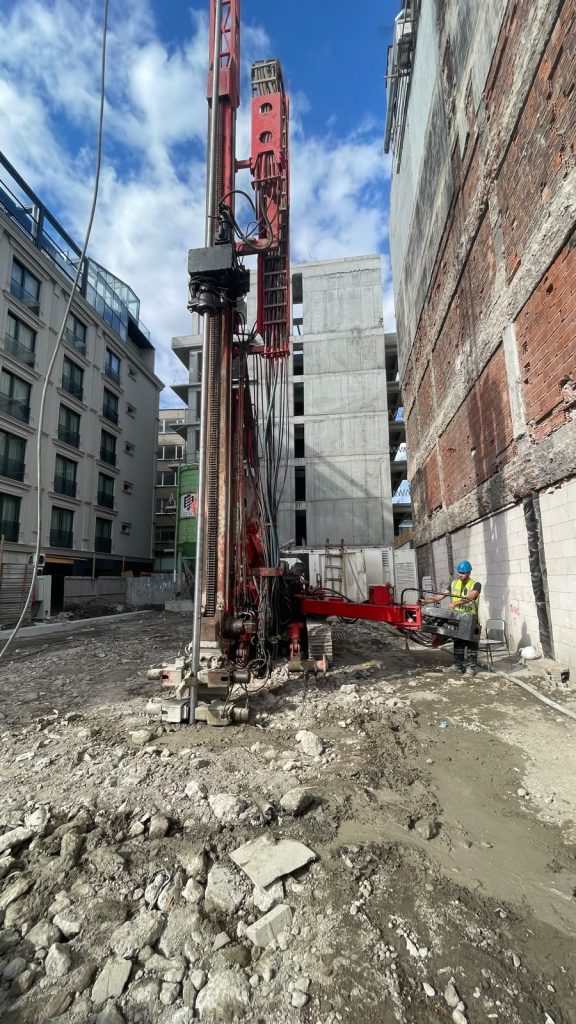
Jet grouting is a ground improvement method: a high-pressure jet cuts the soil and mixes it with cement grout in place to form columns. We use the Jet 1 and Jet 2 systems; in Karaköy, for example, they kept a foundation below sea level dry.
Systems
Jet 1 and Jet 2
Karaköy columns
Ø80 and Ø100 cm, 8,000 m
Layouts
Single columns, walls, blocks
Purpose
Improvement and cut-off
Control
Process records and cores
Region
Türkiye and Central Asia
What is jet grouting?
Jet grouting is a ground improvement method in which a high-pressure jet cuts the soil and mixes it with cement grout in place. First we drill the rods down to the base of the column. Then we rotate and withdraw the rods while the nozzle jets, forming a cylindrical soil-cement column.
A jet grout column is not a pile. A pile is a separate element that carries load; jet grouting makes the ground itself stronger and less permeable. That is why we often use the two together on the same project.

When do you need jet grouting?
- The excavation goes below groundwater and the base needs to be watertight
- Loose sand or fill would settle, or there is a liquefaction risk
- The ground under an existing building’s foundation needs strengthening
- Water and soil come through or under a retaining wall
- Shafts, tunnels or excavation bases need the ground firmed up in advance
Jet grouting systems: Jet 1, Jet 2 and Jet 3
On site we use the Jet 1 and Jet 2 systems. We describe Jet 3 here for comparison only. We choose the system from the ground, the column diameter needed and the purpose.
| Topic | Jet 1 | Jet 2 | Jet 3 |
|---|---|---|---|
| Fluids | Grout only | Grout and air | Water, air and grout |
| Column diameter | Relatively small | Medium to large | Large |
| Suitable ground | Sand, gravel, fill | Sand, silt, soft clay | Wide range including clay |
| Fen Zemin | We use it | We use it | We do not use it |
For example, in the sand and fill of the Karaköy waterfront we built columns of Ø80 and Ø100 cm. However, column diameter varies with the ground, so on large jobs we recommend trial columns.
Where do we use jet grouting?
We use jet grouting mostly for two purposes: strengthening the ground and cutting off water. So the purpose also decides how we lay out the columns.
Cut-off under foundations
Forms a watertight base under the foundation when the dig goes below groundwater.
Ground improvement
Reduces settlement and raises bearing capacity in loose sand and fill.
Under existing buildings
Strengthens the ground under a building’s foundation without emptying the building.
Support for shoring
Stops water and soil between piles and firms up the excavation base.

How do we build jet grout columns?
Each column takes five steps. Throughout the process we also keep pressure, rotation speed and withdrawal speed at the design values.

- Setting out and drilling: We mark the column centres and drill the rods down to the base of the column.
- Jetting: At the column base we start the pump and the high-pressure jet.
- Rotating withdrawal: We rotate the rods and withdraw them at a steady rate. The soil mixes with grout and the column rises.
- Spoil return: We watch the spoil that comes up around the rods at all times and move it to an agreed area on site.
- Unjetted zone: Where needed, we form the column only at the required depth. The part above stays untreated; this is how we prepared the ground under the Karaköy foundation.
What we watch most closely on site: the spoil return must never stop. If spoil cannot reach the surface, pressure builds up in the ground and the ground can heave. So if the return stops, we stop jetting at once and find the cause.
Jet grout column diameter and volume
The ground, the system and the jet energy set the column diameter. For example, in Karaköy we built Ø80 and Ø100 cm columns. The table below shows the volume of treated ground in one metre of column.
| Column diameter | 1 m of column | 10 m of column |
|---|---|---|
| Ø60 cm | 0.283 m³ | 2.83 m³ |
| Ø80 cm | 0.503 m³ | 5.03 m³ |
| Ø100 cm | 0.785 m³ | 7.85 m³ |
| Ø120 cm | 1.131 m³ | 11.31 m³ |
| Ø150 cm | 1.767 m³ | 17.67 m³ |
This volume is the zone where soil and cement mix. The ground and the mix design set the cement consumption. Also, in secant layouts you should not count the overlap twice.
Jet grouting quantity and volume calculator
You can work out the total column length and the treated ground volume for your project below. The result is for an early budget; the design sets the final quantities.
Optional: rough budget with your own unit rates
Rough budget: —
Geometric volume of the columns. Binder take depends on the soil and the mix design; overlaps between columns are not deducted.
Quality control and coring of jet grout columns
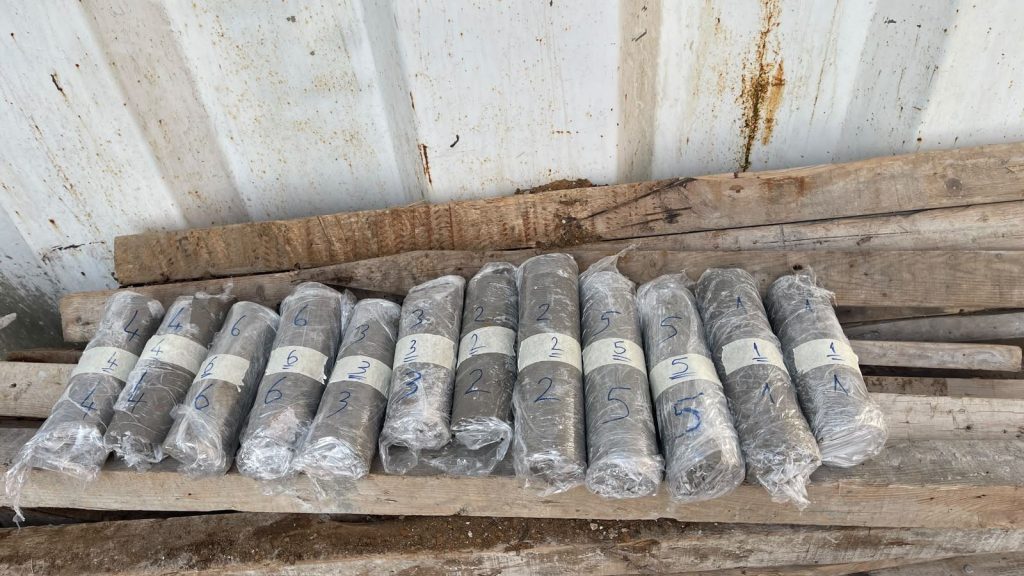
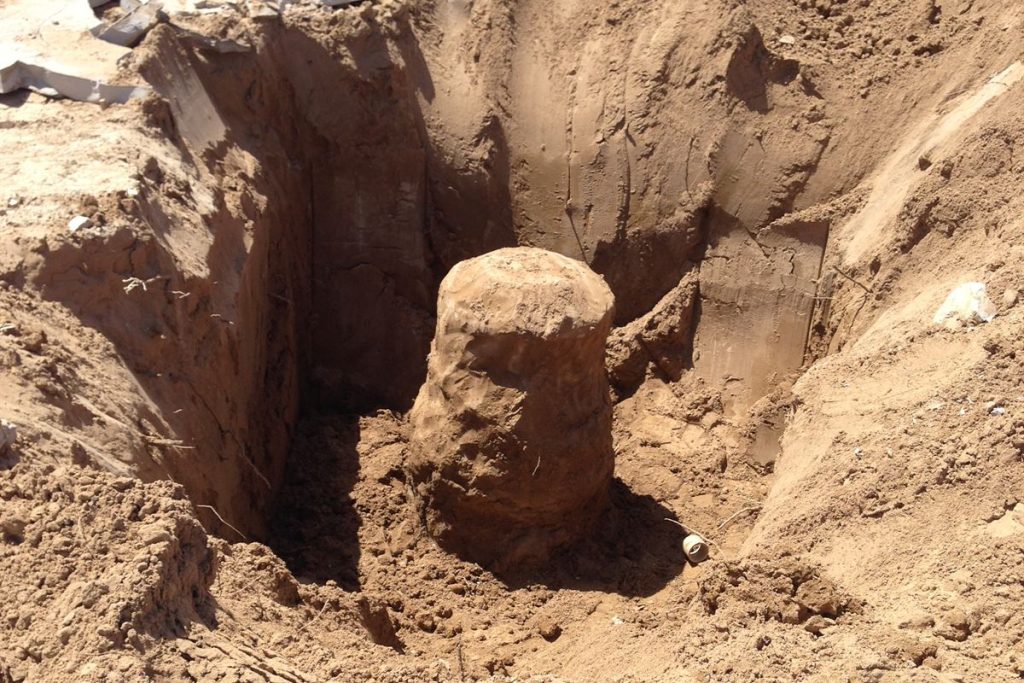
Nobody can see a column inside the ground. For this reason, we check quality through both the process and samples. In Karaköy, for example, we took cores from the columns, and when the excavation opened, the ground under the foundation stayed dry.
| Check | What it shows | What it does not show |
|---|---|---|
| Process record | Pressure, rotation and withdrawal speed, grout volume | The actual column diameter |
| Trial column | Actual diameter and continuity in the ground | Ground variation across the whole site |
| Core samples | Column strength and uniformity | Overlap between columns in full |
| Inspection after excavation | How well the cut-off works on site | The zone outside the excavation |
Our jet grouting projects
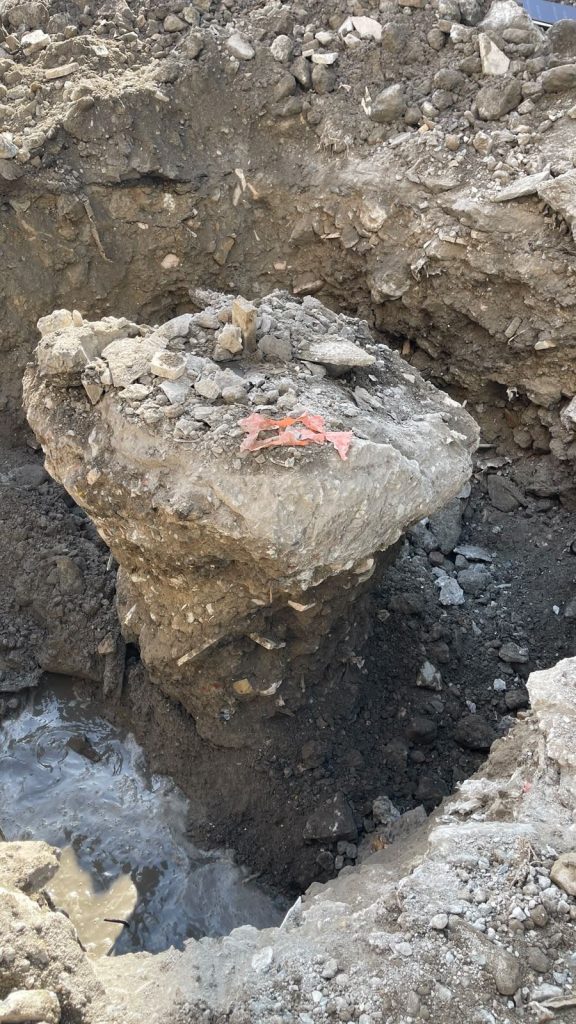
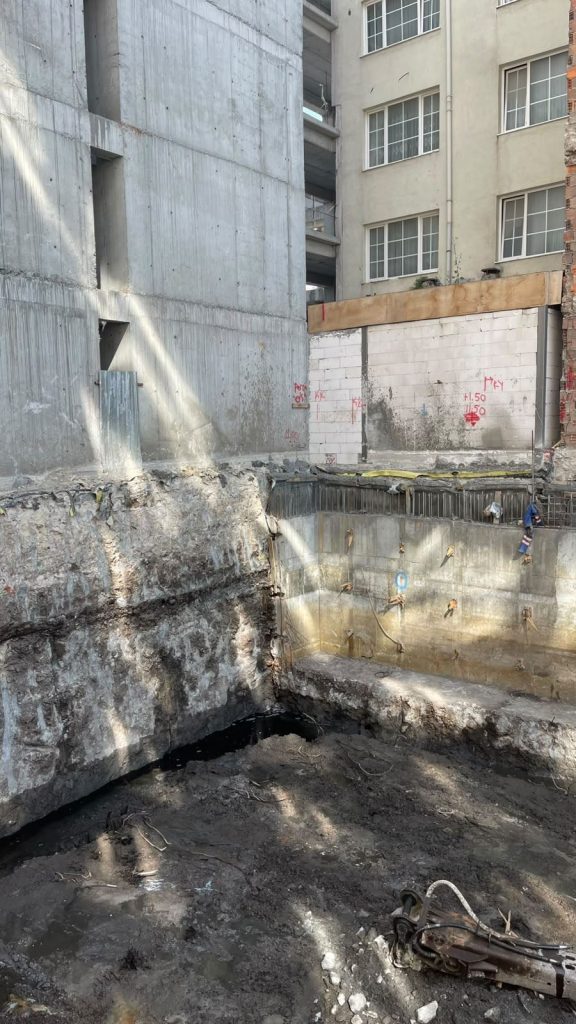
800 tangent columns of Ø80 and Ø100 cm, 8,000 m in total. The ground under the foundation, about 4 m below sea level, stayed dry.
The foreman of the crew that built the shaft wall after us said this while breaking out the columns: “I have been doing this work for a long time and I have never seen jet grouting this good. After your jet grouting, our job was very easy.” (translated from Turkish)
Our founder, Abdullah Çetintaş, also worked on large jet grouting jobs in earlier roles. Examples include 300,000 m of jet grout at Ashgabat Airport and 60,000 m at Lotus Tashkent City. Others are 50,000 m of Jet 2 at the Navoi thermal power plant and 300,000 m of jet grout with bored piles on the Amasya Ring Road. See our founder’s earlier projects.
What does the price of jet grouting depend on?
We usually price jet grouting per metre of column. However, even for the same length, the cost changes clearly with the ground and the diameter. That is why we do not publish rates and quote from the quantities instead.
- Column diameter, length, number and total quantity
- System: Jet 1 or Jet 2
- Ground type and cement consumption
- Unjetted length and working level
- Removal of returning spoil from site
- Trial columns, cores and other tests, mobilisation
What to send for a quote
- Site investigation report and borehole logs
- Column plan with diameters, lengths and numbers
- Purpose: cut-off, ground improvement or underpinning
- Excavation depth, groundwater level and details of neighbouring buildings
Write to us even if your design is not final yet. We will then look at the site investigation and discuss which layout and system suit your site.
Frequently asked questions about jet grouting
We have grouped the questions we receive by who asks them. If yours is not here, call us or write through the quote form.
Buying and cost
How much does jet grouting cost per metre?
We do not publish a fixed rate, because the price depends on the ground, the diameter and the system. Send the site investigation and the column plan and we will quote from the quantities. Our quote also shows the unjetted length, spoil removal and testing on separate lines.
Who supplies the cement?
We agree at quote stage who buys the cement and state it clearly in the quote. Cement use varies with the ground and is a major cost item.
Is jet grouting cheaper than DSM?
In suitable ground and for large volumes, DSM is often cheaper, because it uses less cement and produces less spoil. In tight spaces, under existing buildings or in gravelly ground, however, jet grouting comes first.
Why do quotes from different firms differ so much?
Usually the scope differs. For example, one quote covers Jet 1 and another Jet 2, or one leaves out spoil removal. Line up the diameter, the system and the items first, then compare the unit rates.
Project managers and contractors
How long does jet grouting take?
The number of columns, their length, the ground and the number of rigs set the duration. Working hours matter too; in Karaköy, narrow streets limited us to 10:00–17:00. So with the quote we provide a programme based on the quantities.
Will jet grouting damage the building next door?
Jet grouting done properly does not cause vibration. The real risk is pressure building up in the ground when the spoil return stops, which can cause heave. So we recommend monitoring neighbouring buildings and watching the return at all times.
Can jet grouting stop water completely?
Walls and bases of overlapping columns cut off most of the water. For example, in Karaköy the foundation about 4 m below sea level stayed dry. Even so, you still need a drainage plan for small seepages.
Do you combine jet grouting with bored piles?
Yes. In Karaköy, for example, we built secant bored piles for the shoring and jet grouting under the foundation. One team plans both jobs, and the programme gets simpler.
Site engineers
What do we need to prepare on site?
The rig, silo, mixer and high-pressure pump need a level working area. Also plan for plenty of water, power and a pit to collect the returning spoil. In Karaköy, for example, we set up the silo and pump on a tight site together before work began.
What do you do with the returning spoil?
We lead the spoil from the column head into a channel or pit. After a while it hardens and you can dig it out and haul it away. Removing it from site is usually a separate item.
How do you keep high-pressure work safe?
Jet grouting runs at very high pressure, and hoses and joints carry real risk. So we check the pressure line before work starts and keep everyone away from it while jetting.
When can excavation start?
The columns need time to harden. The column’s role and the design set this period. We decide with the supervising engineer before excavation starts.
Supervising engineers and inspectors
How do you test a column?
Coring is the most reliable method; the laboratory then tests the cores in compression. You can also excavate a trial column and see its diameter directly. In Karaköy, for instance, we took cores from the columns.
What records do you keep?
For each column we record its number, length, system, pressure, rotation and withdrawal speed, and grout volume. If the spoil return had a problem, we note that too.
Which standard do you work to?
For construction we follow EN 12716 (execution of jet grouting), which Türkiye adopts as TS EN 12716. Designers use TBDY 2018 and Eurocode 7. On public works we also follow the client’s technical specification.
Structural and geotechnical designers
What sets column strength?
Ground type, cement content and how evenly the mix blends set the strength. For example, a column in sand usually comes out stronger than one in clay. So you need core results to confirm the design value.
How should columns be laid out for a cut-off?
The columns need enough overlap, because a tangent layout does not stop water. Columns also deviate with depth, so the overlap has to allow for that deviation.
Can jet grouting reduce liquefaction risk?
Yes. Jet grouting can strengthen loose sand and reduce the risk of liquefaction. The layout and improvement ratio, however, need a design to TBDY 2018.
Can a column take tension and bending?
A jet grout column has no reinforcement and is weak in tension. Where the design needs tension or bending capacity, a steel insert goes into the column, or piles do the job instead.
Owners and neighbours
Can you jet grout under my building?
Yes, jet grouting also works under existing buildings. However, it calls for close watch on the spoil return and monitoring of the building. In the end, the strengthening design makes the decision.
Is jet grouting noisy?
Apart from the pump and the rig, there is no loud noise. There is no hammering either, so it suits work in the city. We plan working hours around local rules.
Academics and students
What is the difference between jet grouting and permeation grouting?
In permeation grouting the grout enters the pores at low pressure and the soil stays intact. In jet grouting, by contrast, a high-pressure jet breaks up the soil and mixes it with grout. As a result, jet grouting also works in fine-grained soils where permeation grouting fails.
What does the air do in Jet 2?
The air wraps around the grout jet like a sleeve. As a result, the jet reaches further into the ground and the column gets larger.
How does jet grouting differ from DSM?
In DSM a paddle tool mixes the soil mechanically, and the diameter equals the tool diameter. In jet grouting, by contrast, a high-pressure jet does the mixing and the diameter varies with the ground. You can find a detailed comparison on our DSM page.
Why is the spoil return such an important sign?
The flow shows that the jet is cutting the soil and that pressure is escaping. If the flow drops, pressure can build up in the ground. That is why it is one of the key signs in process control.

Sources
Request a quote for jet grouting
Send us your site investigation and column plan. We will settle the right system for your purpose and a quantity-based quote together.