


Services · Engineering · Pile testing and geotechnical tests
Pile Testing and Geotechnical Testing: PIT, Load Tests and Coring
Pile testing shows whether a finished pile is sound and meets the design. Our specialist testing partner carries out the tests; we plan the programme around construction and bring the results back to site.

Who tests
Our testing partner
Piles
PIT, CSL, static load test
Anchors and nails
Stressing and pull-out tests
Jet grouting
Core samples
Karaköy
PIT and coring completed
Region
Türkiye and Central Asia
What is pile testing?
Pile testing is the general name for tests that measure the quality and load behaviour of a pile that stays hidden in the ground. For example, some tests show whether a pile is continuous, while others show how much load it carries.
Generally, the client, the specification or the design sets the type of test. Our testing partner then carries out the tests. We fit the test programme into the construction schedule, prepare the pile heads and interpret the results with the designer.
Types of pile testing and other geotechnical tests
Each test answers a different question. So before choosing a test, we first make clear what we want to learn.
| Test | What it shows | What it does not show |
|---|---|---|
| PIT (integrity test) | Changes in section and defects along the pile | How many tonnes the pile can carry |
| CSL (crosshole sonic logging) | Concrete between tubes cast into the pile | The zone outside the tubes in full |
| Static load test | Settlement under load and capacity | The quality of the other piles on its own |
| Anchor stressing test | That the anchor holds the test load | Long-term behaviour in full |
| Nail pull-out test | Bond between nail and ground | How the whole wall behaves |
| Core samples | Strength of jet grout and DSM columns | The condition of every column |
| Inclinometer monitoring | Movement of a retaining wall with depth | The quality of a single element |
How do we plan pile testing?
Whether a test gives a sound result depends largely on preparation. That is why we suggest agreeing the test programme before construction starts.
- Choosing the test: We set the type and number of tests from the specification and the design.
- Choosing the piles: We pick the test piles together with the designer.
- Waiting: We wait until the concrete has gained enough strength.
- Preparation: We break down, clean and prepare the pile head for the test.
- Interpretation: We review the results together with the construction records.
The most common problem we see: PIT on a pile head that nobody has cleaned. Weak concrete at the top gives a false signal, and a sound pile can look suspect. That is why we break the pile head back to sound concrete before PIT.
Pile testing and coring in Karaköy
At the Karaköy office building, our testing partner ran PIT tests on the secant bored piles. We also took core samples from the jet grout columns under the foundation. When the excavation opened, the base about 4 m below sea level stayed dry.
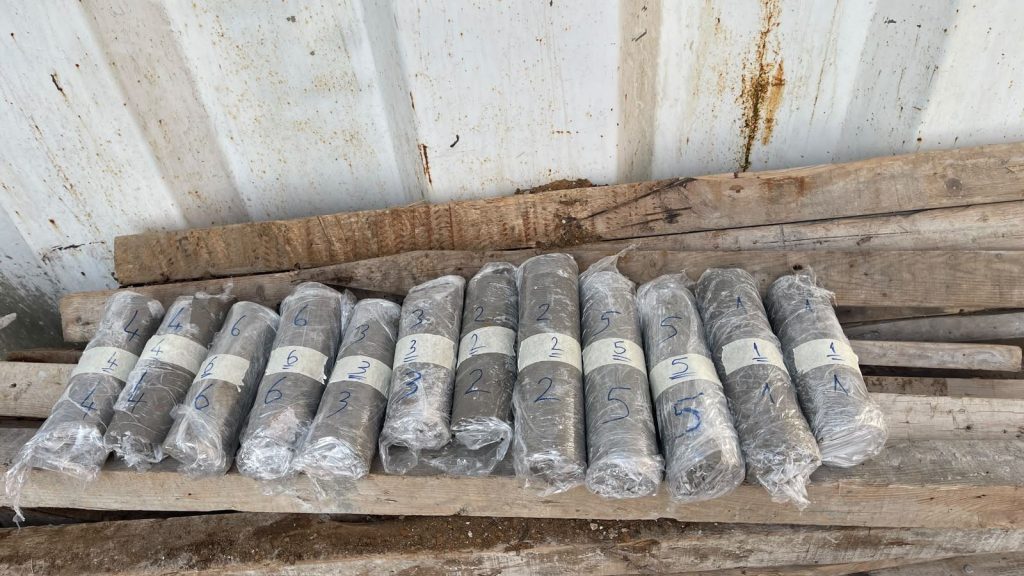
You can find the project details on the Karaköy project page.
What does the price of pile testing depend on?
In short, the type and number of tests set the cost. For example, a static load test needs a reaction system, so it is far more involved than PIT. That is why we settle the test programme first and then quote.
- Type and number of tests
- Test load and reaction system
- Pile head preparation
- Site access and mobilisation
Frequently asked questions about pile testing
We have grouped the questions we receive by who asks them. If yours is not here, call us or write through the quote form.
Clients and procurement
Who arranges pile testing?
The client usually asks for it, and most specifications include it. If the client asks, our testing partner carries out the tests.
How many piles should we test?
The specification and the design set the number of tests. For example, PIT often covers a large share of the piles. Static load tests, on the other hand, stay limited to a few selected piles.
PIT or a load test?
The two answer different questions. PIT shows whether a pile is continuous, while a load test shows its capacity. So one does not replace the other.
Project managers and site engineers
When do you test?
We test only after the concrete has gained enough strength. Before that, we also clean the pile head and prepare it for the test.
Does testing affect the programme?
A static load test needs preparation and waiting time, so it belongs in the programme from the start. PIT, by contrast, is quick.
What happens if PIT gives a suspect result?
First we compare it with the construction records. If needed, we arrange further tests and decide together with the designer.
Supervising engineers and designers
How does a static load test work?
First, a jack loads the pile in steps against a reaction beam. At each step, gauges fixed to an independent reference beam show the settlement.
How does PIT work?
First we tap the pile head with a small hammer. The wave travels down the pile and reflects, and an accelerometer records the reflection. As a result, changes in section leave a trace in the signal.
Which standards apply?
We follow EN 1536 for pile construction and EN 1537 for anchor tests; Türkiye adopts both as TS EN standards. For the test methods we also follow the standards in the specification.
Academics and students
Why does PIT not show bearing capacity?
PIT uses a very small impact; in other words, it does not load the ground. So it only tells you about the pile’s geometry, not its capacity.
What is the difference between CSL and PIT?
CSL sends ultrasonic waves between tubes inside the pile and examines the concrete between them. PIT, by contrast, scans the whole length with a single tap on the pile head.

Sources
Let us plan your pile testing programme together
Send us the specification and the pile list. We will settle the type, number and timing of tests with our partner.