


Micropile Installation | Fen Zemin & İnşaat
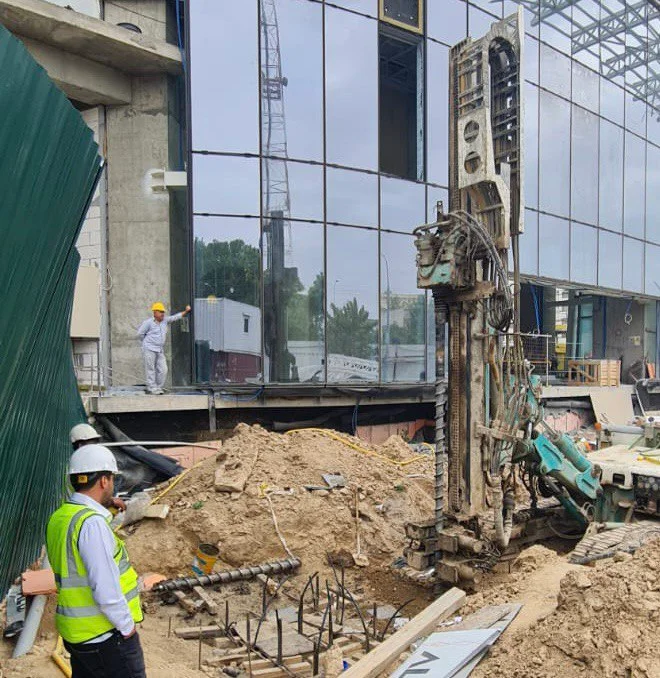
Micropile Installation | Fen Zemin & İnşaat
Fen Zemin & İnşaat provides micropile installation for foundation strengthening, underpinning, low-headroom areas and projects where conventional large bored piling equipment cannot operate.
Micropiles are small-diameter drilled and grouted deep foundation elements that typically combine a steel load-carrying element with cementitious grout.
Their compact drilling equipment makes the system particularly suitable for existing buildings, basements, restricted urban sites and projects with limited access.
However, equipment access alone does not determine whether a micropile solution is appropriate. Structural loads, the existing foundation, soil and rock conditions, groundwater, drilling method and structural connection must all be considered.
What Is a Micropile?
A micropile is a small-diameter drilled and grouted deep foundation element.
Depending on the design, the system may incorporate high-strength steel bars, steel pipe, casing or other structural steel elements.
Cementitious grout surrounds the steel and contributes to load transfer between the foundation element and the surrounding soil or rock.
A micropile should not simply be regarded as a smaller bored pile.
Conventional bored piles are generally larger reinforced-concrete elements constructed using heavy rotary drilling equipment. Micropiles rely more strongly on steel reinforcement, grout bond and compact drilling systems.
Where Are Micropiles Used?
Typical applications include foundation strengthening, underpinning, basement construction, low-headroom work, restricted-access sites and projects where conventional piling rigs cannot operate.
They may also be considered where additional structural loads need to be transferred into more suitable soil or rock.
The correct foundation system should always be selected according to structural loading, ground conditions and site constraints.
Foundation Strengthening and Underpinning
Existing structures may require additional foundation support because of increased loads, strengthening works, building modifications or inadequate existing foundation performance.
In these projects, the geotechnical resistance of the new pile is only one part of the solution.
Structural load must also be transferred effectively from the existing building into the new foundation element.
Depending on the design, this may require reinforced concrete pile caps, new foundation beams, footing enlargement, steel connections or other project-specific details.
The objective is to create a complete and reliable load path.
Why construction sequence matters
An existing building continues to carry load while foundation strengthening is being carried out.
For this reason, uncontrolled excavation or simultaneous intervention at too many foundation locations may be inappropriate.
Micropile installation, modifications to existing foundations and new structural connections should follow the sequence established by the design.
Restricted Access and Low Headroom
Large bored piling rigs require significant working space and headroom.
They may not be able to operate inside basements, industrial buildings or narrow urban sites.
Compact micropile drilling equipment can provide an important advantage in these conditions.
However, machine size alone is not sufficient.
Site entrance dimensions, mast movement, available headroom, rod and casing lengths, material handling and grout-equipment location must also be considered.
How Are Micropiles Installed?
The construction method depends on the design, ground conditions and selected system.
1. Design and site review
Available ground investigation information, structural drawings, strengthening design, foundation details and pile layout are reviewed before construction.
Where work takes place within an existing structure, columns, beams, existing foundations, utilities and equipment access are also assessed.
2. Setting out
Pile centres are transferred to the site according to the approved design.
Accurate positioning is particularly important close to existing foundations and buried services.
3. Drilling
The borehole is drilled to the required depth, diameter and inclination.
The drilling system is selected according to soil and rock conditions.
Temporary casing may be required in unstable ground, while gravel, obstructions or rock may require different drilling tools.
4. Steel installation
The specified steel load-carrying element is placed after drilling.
Depending on the design, this may consist of a high-strength bar, steel tube or another structural steel system.
Its dimensions and properties are determined by the design loads.
5. Grouting
Cementitious grout forms a fundamental part of the pile.
It surrounds the steel element and contributes to the transfer of load to the surrounding ground or rock.
Depending on the system, grout may be placed by gravity, controlled pressure or a project-specific multi-stage procedure.
Higher grout pressure alone does not indicate better construction quality.
Grouting and Load Transfer
The bond between the grouted pile and the surrounding soil or rock contributes significantly to foundation behaviour.
Installing the steel element alone does not complete the system.
Grout continuity, material properties, installation method and construction records should therefore form part of the quality-control process.
Different ground conditions can respond differently to the same grouting procedure.
Connection to an Existing Foundation
In underpinning projects, the structural connection between the new pile and existing building is critical.
Even a pile with adequate geotechnical resistance cannot perform correctly if structural load cannot be transferred into it.
Connection details therefore require coordination between structural and geotechnical design.
How Are Diameter and Length Determined?
There is no single standard diameter or length suitable for every project.
Pile geometry depends on structural loads, soil and rock profile, required performance, existing foundations, steel reinforcement, grout bond, working space and drilling equipment.
Increasing diameter alone does not automatically result in better foundation performance.
Can micropiles be inclined?
Yes. Piles may be installed vertically or at an inclination where required by the design.
The inclination should be determined by structural and geotechnical requirements, not by field convenience.
Ground and Rock Conditions
Micropiles can be installed in a wide range of soils and rock where appropriate drilling methods are available.
Clay, sand, gravel, fill, weathered rock and competent rock may require different drilling equipment or casing arrangements.
Ground conditions can affect drilling productivity, bond length, grout behaviour and load-transfer characteristics.
A detail developed for one project should therefore not automatically be transferred to another site.
Groundwater
Groundwater does not automatically prevent installation.
However, water level and soil permeability may affect borehole stability, casing requirements and grouting.
Groundwater should therefore be considered as part of the drilling and grouting methodology.
Micropile Quality Control
Most of the completed foundation element remains below ground, so construction records are important.
Depending on project requirements, records may include pile position, drilling depth, soil or rock encountered, steel element, grout quantity and unusual conditions observed during installation.
The objective is not simply to record drilled metres, but to demonstrate that the specified foundation system has been constructed consistently.
Load Testing
Static load testing may be specified to evaluate the load-displacement behaviour of installed piles.
Controlled load is applied and movement is measured against the project acceptance criteria.
The result should therefore be interpreted as foundation behaviour under load rather than simply as a pass-or-fail observation.
Micropiles vs Bored Piles
Both systems can be used as deep foundations, but their construction methods and site requirements differ.
Bored piles are generally larger-diameter reinforced-concrete elements installed using heavy rotary drilling equipment.
Micropiles use smaller drilling equipment and typically rely on steel reinforcement and cementitious grout.
For restricted access, low headroom and existing-building strengthening, a micropile solution may provide practical advantages.
Where large reinforced-concrete piles are required and working space is available, bored piling may be more appropriate.
Selection should be based on engineering requirements rather than unit price alone.
Micropiles vs Jet Grouting
A micropile is a structural foundation element that transfers building loads into suitable soil or rock.
Jet grouting is a ground improvement method that modifies existing soil by mixing it in situ with cementitious binder.
The two systems therefore perform different engineering functions and may also be used together within the same project.
Advantages and Limitations
Compact equipment, low-headroom capability, work close to existing structures and adaptability to different drilling inclinations can provide significant advantages.
However, the relatively small cross-section means individual pile behaviour differs from larger foundation elements.
Projects with high total loads may require more piles.
Restricted sites also still need sufficient space for drilling rods, casing, grout equipment and material handling.
Micropile Cost
Micropile cost should not be evaluated solely on a price-per-metre basis.
Total cost can be affected by pile dimensions, quantity, ground and rock conditions, drilling method, casing, steel reinforcement, grout consumption, foundation connection details, available headroom, site access, testing and mobilisation.
Projects with identical drilling quantities may therefore have significantly different costs.
How Does Fen Zemin & İnşaat Evaluate a Project?
Fen Zemin & İnşaat begins with a review of the available technical information.
Where available, the ground investigation report, existing structural drawings, strengthening design, pile layout, design loads and site photographs are considered together.
Actual field conditions are then assessed.
Equipment access, headroom, foundation levels, basement access, structural elements, utilities and material logistics can all influence the construction methodology.
The objective is not simply to complete small-diameter drilling, but to construct the designed load-transfer system correctly under actual field conditions.
Micropile Installation in Istanbul and Across Türkiye
Fen Zemin & İnşaat is based in Ümraniye, Istanbul.
In addition to foundation-strengthening, urban redevelopment, basement and restricted-access projects in Istanbul, projects in other regions of Türkiye may be evaluated depending on project scope, mobilisation requirements and site conditions.
Micropile Frequently Asked Questions
What is a micropile?
A micropile is a small-diameter drilled and grouted deep foundation element that typically uses steel reinforcement and cementitious grout.
Where are micropiles used?
Typical applications include underpinning, foundation strengthening, basements, low-headroom areas and restricted-access sites.
Is a micropile the same as a bored pile?
No. Bored piles are generally larger reinforced-concrete elements. Micropiles use smaller drilling equipment and rely more heavily on steel reinforcement and grout.
Can micropiles be installed inside existing buildings?
Yes, where equipment access and available headroom allow safe operation.
Can micropiles strengthen an existing foundation?
Yes. However, the structural connection between the new pile and the existing foundation must also be designed.
Is there a standard micropile diameter?
No. Diameter is determined according to design loads, ground conditions, reinforcement, drilling method and project requirements.
Can micropiles be installed below groundwater level?
Yes, where an appropriate drilling and grouting methodology is used.
Are micropiles load tested?
Static load testing may be required by the design or technical specification.
What affects micropile cost?
Pile geometry, quantity, ground conditions, steel, casing, grout, foundation connections, access, mobilisation and testing requirements can all affect cost.
What information is required for a quotation?
Where available, provide the ground investigation report, existing structural or strengthening design, pile layout, dimensions, quantities, project location and site photographs.
Discuss Your Micropile Project with Fen Zemin & İnşaat
For foundation strengthening, underpinning, restricted-access construction or other micropile applications, you can share your available technical information with Fen Zemin & İnşaat.
Providing the ground investigation report, foundation or strengthening drawings, approximate quantities and site information allows the technical scope to be evaluated more accurately.
Contact the Fen Zemin & İnşaat technical team to discuss your micropile project.