


Jet Grouting Ground Improvement | Fen Zemin & İnşaat
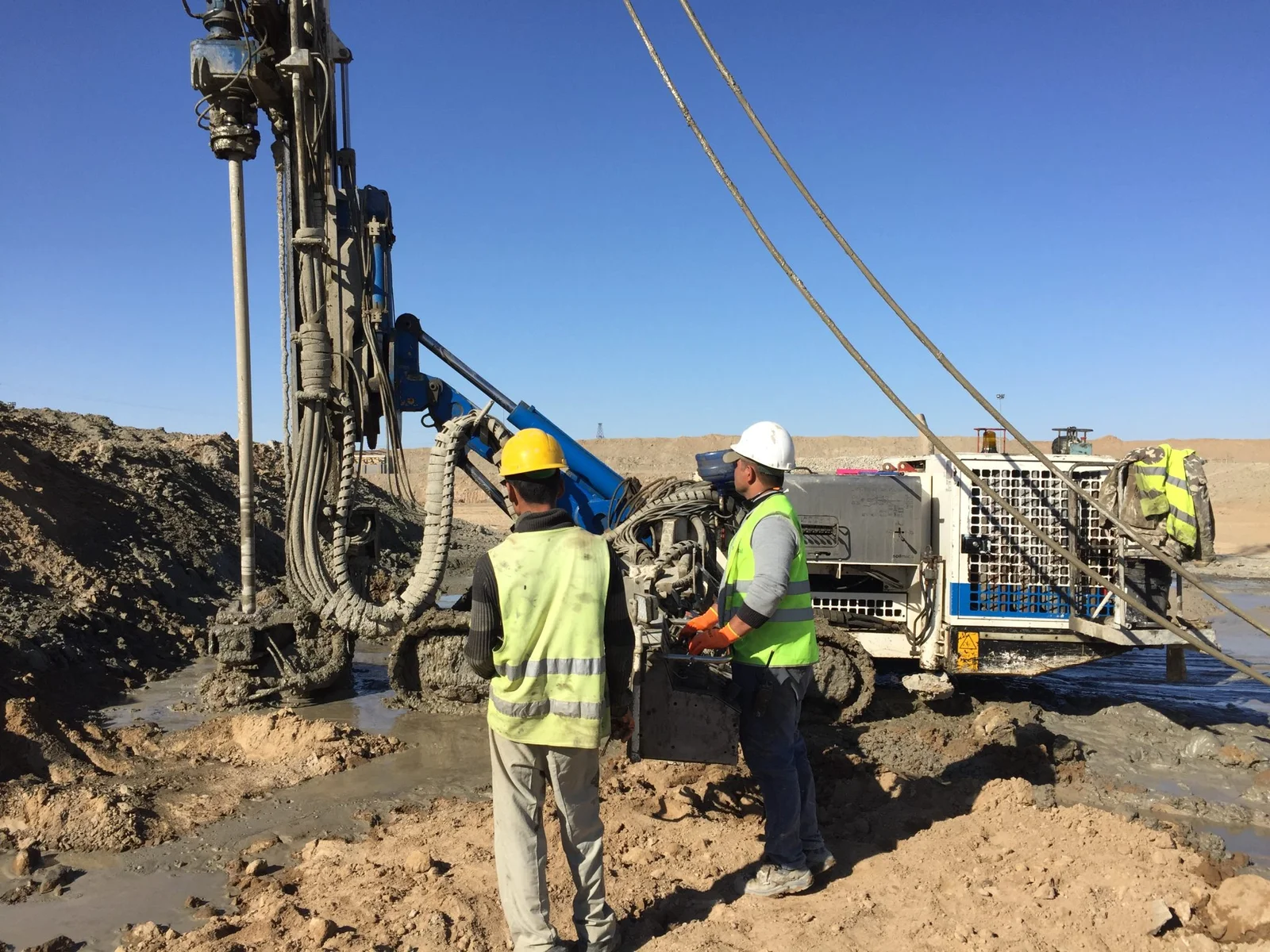
Fen Zemin & İnşaat jet grouting application
Jet Grouting Ground Improvement | Fen Zemin & İnşaat
Fen Zemin & İnşaat provides jet grouting for ground improvement, foundation strengthening, settlement control, excavation base treatment and project-specific groundwater cut-off applications.
Jet grouting is an in-situ ground improvement method in which high-energy fluid jets break down the existing soil and mix it with a cement-based binder to form soil-cement elements within the ground.
The result does not depend on injection pressure alone. Soil type, jetting system, grout properties, nozzle configuration, rod rotation and withdrawal rates, treatment depth and actual site conditions all influence column geometry and the properties of the treated material.
For this reason, Fen Zemin & İnşaat plans jet grouting according to the ground investigation, design requirements and actual field conditions rather than applying a standard set of parameters to every project.
What Is Jet Grouting?
Jet grouting is an in-situ technique used to modify the engineering properties of soil.
The drilling string is advanced to the design depth. Once the target level is reached, the jetting system is activated.
As the rod rotates and is withdrawn at a controlled rate, high-energy jets break down the surrounding soil and mix it with cementitious grout.
The process creates a generally cylindrical soil-cement element.
Depending on the design objective, columns may be installed as isolated elements, in regular patterns, in contact with each other or as overlapping columns forming panels or blocks.
A jet grout column is not the same as a conventional reinforced concrete bored pile.
A bored pile is generally a structural deep foundation or retaining element, whereas jet grouting modifies the existing ground to create soil-cement elements.
What Is Jet Grouting Used For?
Jet grouting can be considered for a range of geotechnical applications.
Depending on the project and ground conditions, it may be used for:
- ground improvement,
- foundation strengthening,
- improvement of bearing behaviour,
- settlement control,
- excavation base improvement,
- reduction of groundwater flow,
- construction of low-permeability barriers or blocks,
- support of existing foundations.
The same column geometry is not suitable for every application.
A foundation improvement layout and an overlapping cut-off wall, for example, have different design objectives and therefore require different column arrangements.
Which Soils Are Suitable for Jet Grouting?
Jet grouting can be applied in a wide range of soils, but different soils do not respond to high-energy jets in the same way.
Particle size distribution, density, plasticity, water content and ground variability all influence the achievable geometry and treatment parameters.
Sandy and Granular Soils
Sandy and granular soils are generally more readily eroded by high-energy jets.
Under suitable conditions, the treatment radius may differ significantly from that achieved in fine-grained or highly plastic soils.
Jet grouting can also be carried out below groundwater level, but spoil return, grout behaviour and the effect on surrounding ground need to be monitored.
Silts and Clays
Jet grouting may also be used in silts and suitable cohesive soils.
However, consistency and plasticity influence the ability of the jet to break down and mix the existing soil.
The same parameters should not be assumed to produce the same column geometry in stiff clay and loose sand.
Fill Materials
Jet grouting may be considered in heterogeneous or uncontrolled fills.
However, large fragments, concrete debris, old foundations or unidentified obstructions can affect drilling and jetting performance.
For this reason, the quality of ground investigation and actual drilling observations are particularly important on fill sites.
How Is Jet Grouting Carried Out?
Successful jet grouting involves more than simply injecting grout at high pressure.
Drilling, jetting, rod movement, grout preparation and field monitoring are parts of the same construction process.
1. Review of Design and Ground Information
The process begins with a review of the ground investigation and available geotechnical design.
Soil layers, groundwater, target treatment depth, column arrangement and required performance criteria are evaluated.
Rig access, working platform conditions, headroom, neighbouring structures and existing utilities are also considered.
2. Setting Out the Columns
Column centres are set out according to the approved design.
Spacing and geometry depend on the engineering objective.
Columns may be installed individually or arranged as overlapping elements forming panels, walls or blocks.
Accurate setting out is particularly important where continuity is required for groundwater control.
3. Drilling
The jet grouting string is advanced to the required treatment depth.
Ground encountered during drilling is compared, where possible, with the assumptions in the ground investigation.
Unexpected fill, hard layers or different ground behaviour may require the construction parameters to be reviewed.
4. Jetting
Once the target depth has been reached, jetting begins.
High-energy fluids break down the soil and, depending on the selected system, cementitious grout is mixed with the in-situ material.
The drilling string is rotated and withdrawn at controlled rates.
5. Withdrawal and Rotation Control
Withdrawal rate and rotation are controlled throughout the treatment.
In addition to pressure, column formation is influenced by:
- flow rate,
- withdrawal speed,
- rotation speed,
- nozzle configuration,
- grout properties,
- treatment duration.
Jet grouting should therefore not be controlled by pump pressure alone.
6. Monitoring Spoil Return
During treatment, a mixture of soil, water and grout may return to the surface through the annulus around the drilling string.
This material is commonly referred to as spoil or return.
The behaviour of the return should be monitored during production.
An unexpected reduction or loss of return may indicate a change in subsurface conditions or treatment behaviour.
Single, Double and Triple Fluid Jet Grouting Systems
Jet grouting techniques can be classified according to the number and type of fluids used during treatment.
Jet 1 – Single Fluid System
In a single-fluid system, high-energy cement grout is used both to erode the soil and to mix the treated material with cementitious binder.
The achievable column geometry depends on soil conditions and treatment parameters.
Jet 2 – Double Fluid System
In a double-fluid system, the cement grout jet is assisted by compressed air.
The air shroud modifies the effectiveness of the jet and may allow different column geometries under suitable conditions.
The system should not be selected simply because a larger column is desired.
Jet 3 – Triple Fluid System
In a triple-fluid system, soil erosion and binder injection are performed through separate fluid arrangements.
Water and air are generally used to break down the soil, while cementitious grout is introduced separately as the binder.
Selection between single, double and triple fluid systems should consider soil type, target geometry, treatment depth, design objective and site conditions.
How Is Jet Grout Column Diameter Determined?
There is no single standard column diameter suitable for every project.
Column geometry is influenced by:
- soil type,
- density and plasticity,
- jetting system,
- injection pressure,
- flow rate,
- nozzle configuration,
- rod withdrawal rate,
- rotation speed,
- grout properties.
A certain pump pressure does not automatically guarantee a specific column diameter.
The same equipment and nominal parameters may produce different results in different soil layers.
Where required, trial columns can be used to evaluate achievable geometry and refine production parameters under actual site conditions.
What Determines Jet Grout Strength?
The strength of the resulting soil-cement material is not controlled by cement content alone.
Existing soil properties, water content, binder composition, treatment parameters and mixing quality all influence the final material.
A soil-cement column formed in sand should not be assumed to have the same properties as one formed in clay using the same nominal parameters.
Where a target strength is specified, field production should be assessed against the project performance criteria.
Jet Grouting Quality Control
Most of the completed treatment remains below ground, making quality control an important part of jet grouting.
Production records may include:
- column location,
- drilling depth,
- injection parameters,
- flow rate,
- withdrawal rate,
- rotation,
- treatment duration,
- spoil-return behaviour.
Where required, trial columns may be installed and hardened soil-cement material may be investigated using cores or other appropriate testing.
The objective is not simply to record completed metres, but to verify that the required geometry and engineering properties have been achieved.
Why Are Trial Jet Grout Columns Used?
Ground investigation provides the principal design information, but the exact response of a particular soil to high-energy jetting cannot always be predicted from theoretical calculations alone.
Where appropriate, trial columns may therefore be constructed.
A trial treatment can provide field information regarding:
- column geometry,
- jetting system,
- production parameters,
- spoil return,
- soil-cement material characteristics.
These results can help confirm or refine the parameters before full-scale production begins.
Jet Grouting for Foundation Improvement
Jet grout columns may be used beneath foundations to improve bearing and settlement behaviour where ground conditions are suitable.
Column diameter, length, quantity and layout should be designed according to structural loads, foundation geometry and the ground profile.
The objective is not necessarily to transfer the entire structural load through the jet grout columns.
Depending on the design, the treated and untreated ground may act together as a composite improved ground mass.
Jet Grouting for Settlement Control
Weak or compressible soils may experience significant settlement under structural loads.
On suitable projects, jet grouting can improve stiffness and strength and contribute to the control of total and differential settlement.
Settlement performance does not depend on column strength alone.
Column geometry, treatment depth, layout, load distribution and underlying soil layers also form part of the design.
Jet Grouting for Groundwater Cut-Off
Overlapping jet grout columns can be used to form low-permeability walls or blocks.
This approach may be considered for:
- deep excavations,
- excavation bases,
- groundwater control,
- retaining systems,
- underground structures.
Geometric continuity between adjacent columns is particularly important where low permeability is required.
Variations in column position, diameter or verticality may create untreated paths through the system.
Jet Grouting for Excavation Base Improvement
In deep excavations, retaining walls alone may not address all geotechnical issues.
Base stability and groundwater effects may also need to be evaluated.
Where suitable, overlapping jet grout columns can be arranged to create an improved block or plug below the excavation.
The need for this treatment and its geometry should be determined by geotechnical analysis.
Jet Grouting vs Bored Piling
Jet grouting and bored piling may appear similar because both involve drilling, but they serve different engineering functions.
A bored pile is generally a reinforced concrete deep foundation or retaining element formed in a drilled borehole.
Jet grouting modifies the existing ground by mixing it in situ with a cementitious binder.
The two methods are therefore not direct substitutes.
They may also be used for different purposes within the same project.
Jet Grouting vs Dynamic Compaction
Both methods fall within ground improvement, but they work in very different ways.
Dynamic compaction densifies suitable loose soils or fills by repeatedly dropping a heavy tamper onto the ground surface.
Jet grouting creates soil-cement elements below ground by erosion and in-situ mixing with cementitious binder.
Method selection should consider ground type, required treatment depth, structural loads, available working area and project performance criteria.
Advantages of Jet Grouting
Where appropriate, jet grouting can offer several practical advantages.
The ability to create improved ground at depth through relatively small-diameter drilling can be useful on sites with existing structures or restricted working areas.
Columns can be arranged as individual elements, overlapping columns, walls or blocks to address different engineering objectives.
Jet grouting can also be performed below groundwater level where project and field conditions are suitable.
These characteristics do not mean that jet grouting is appropriate for every site.
Limitations of Jet Grouting
Jet grouting is sensitive to both ground and site conditions.
Highly heterogeneous fills, large obstructions, old structural remains and very hard or difficult-to-erode layers may affect treatment geometry and productivity.
Spoil is generated during the process and needs to be collected, handled and disposed of appropriately.
Existing utilities and unidentified voids should also be considered before treatment begins.
High injection pressure alone is not an indication of successful jet grouting.
Jet Grouting Cost
Jet grouting cost should not be evaluated solely as a price per metre.
Total cost may depend on:
- column diameter,
- column length,
- number of columns,
- total treatment quantity,
- jetting system,
- soil conditions,
- treatment depth,
- cement consumption,
- required geometry and performance,
- available working space,
- spoil management,
- quality-control requirements,
- project location,
- mobilisation.
Two projects with the same total treatment length can have very different costs if the soil conditions and required column characteristics differ.
A reliable quotation therefore requires review of both ground information and project requirements.
How Does Fen Zemin & İnşaat Evaluate a Jet Grouting Project?
Fen Zemin & İnşaat begins with the available technical documents.
Where available, we review:
- ground investigation report,
- geotechnical design,
- foundation drawings,
- column layout,
- sections,
- quantities.
The engineering objective is defined and the ground profile and groundwater conditions are reviewed.
Actual site conditions are then assessed.
Rig access, working platform, headroom, surrounding structures, existing utilities and spoil management are incorporated into the construction plan.
During full production, project-specific treatment parameters should be monitored consistently.
The objective is not simply to produce a specified number of metres, but to create the ground improvement system required by the design under actual field conditions.
Jet Grouting in Istanbul and Across Türkiye
Fen Zemin & İnşaat is based in Ümraniye, Istanbul.
In addition to residential, commercial, industrial, urban redevelopment, deep excavation and foundation projects in Istanbul, jet grouting projects in other parts of Türkiye may be evaluated depending on project size, mobilisation requirements and site conditions.
Ground conditions, jetting system, equipment, production parameters and site organisation are reviewed individually for each project.
Jet Grouting Frequently Asked Questions
What is jet grouting?
Jet grouting is an in-situ ground improvement method in which high-energy fluid jets break down the existing soil and mix it with a cementitious binder to form soil-cement elements.
What is jet grouting used for?
Depending on the project, jet grouting may be used for ground improvement, foundation strengthening, settlement control, excavation base treatment and low-permeability barriers.
Which soils can be treated with jet grouting?
Jet grouting may be considered in sands, silts and suitable cohesive soils. Density, plasticity, particle size and ground variability influence the selected system and achievable column geometry.
What is the difference between single, double and triple fluid jet grouting?
Single-fluid systems use cement grout for both erosion and mixing. Double-fluid systems use grout assisted by compressed air. Triple-fluid systems separate soil erosion and binder injection through different fluid arrangements.
What diameter is a jet grout column?
There is no universal fixed diameter. Soil conditions, jetting system, flow rate, pressure, nozzle configuration, withdrawal speed and rotation rate all influence column geometry.
Can jet grouting be carried out below groundwater level?
Yes, under suitable project and field conditions. Groundwater, spoil return and surrounding-ground response must be considered during design and construction.
Can jet grouting replace bored piles?
The two systems have different engineering functions. Bored piles are structural deep foundation or retaining elements, while jet grouting modifies the existing soil to create soil-cement elements.
How is jet grouting quality controlled?
Depending on project requirements, treatment parameters, spoil return, trial columns, cores and other field or laboratory controls may be used.
What affects jet grouting cost?
Column geometry, treatment depth, soil conditions, jetting system, cement consumption, site conditions, mobilisation and quality-control requirements all affect total cost.
What information is required for a jet grouting quotation?
Where available, the ground investigation report, geotechnical or foundation design, column layout, diameters, lengths, quantities, project location and site information should be provided.
Discuss Your Jet Grouting Project with Fen Zemin & İnşaat
For foundation improvement, settlement control, groundwater cut-off, excavation base treatment or other jet grouting applications, you can share your available technical information with Fen Zemin & İnşaat.
Where available, provide the ground investigation report, design drawings, column schedule, approximate quantities and site information so that the technical scope can be reviewed accurately.
Contact the Fen Zemin & İnşaat technical team to discuss your jet grouting project.