


Soil Nailing & Soil Nail Walls | Fen Zemin & İnşaat
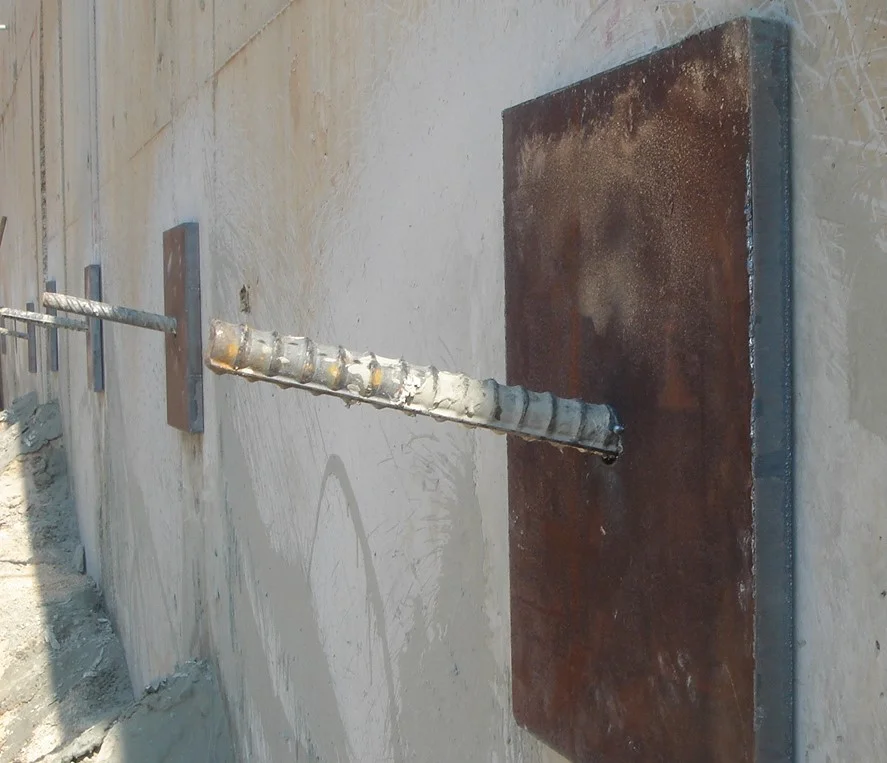
Soil Nailing & Soil Nail Walls | Fen Zemin & İnşaat
Fen Zemin & İnşaat carries out soil nailing for excavation support and slope stabilisation projects, with nail geometry, drilling method, facing system and construction sequence determined according to ground conditions and geotechnical design.
Soil nailing is a passive reinforcement method in which steel bars are installed into the ground at defined angles and spacing to create a reinforced soil mass.
The nails generally work together with the surrounding ground, shotcrete facing, reinforcement and drainage system.
At Fen Zemin & İnşaat, soil nailing is evaluated as a complete retaining system rather than simply as a drilling operation.
What Is Soil Nailing?
Soil nailing is a ground reinforcement technique used to improve the stability of excavations and slopes.
Steel reinforcement bars are installed in drilled holes and typically bonded to the surrounding ground with cement grout.
As excavation progresses and the retained ground undergoes small movements, tensile forces develop in the soil nails.
For this reason, soil nails are generally considered passive reinforcement elements.
They are not normally prestressed in the same way as ground anchors.
Where Is Soil Nailing Used?
Soil nailing may be used in:
- deep excavations,
- basement excavations,
- road cuttings,
- slope stabilisation,
- urban redevelopment projects,
- retaining structures,
- infrastructure works.
The method is particularly suitable where staged top-down excavation is possible and the ground can remain sufficiently stable during each construction stage.
Not every excavation is suitable for soil nailing.
Ground conditions, groundwater, neighbouring structures, excavation geometry and deformation limits must be considered before the method is selected.
How Does a Soil Nail Wall Work?
A soil nail wall does not rely on a single structural element.
The system works through the interaction between:
- the reinforced soil mass,
- steel soil nails,
- grout surrounding the nails,
- shotcrete or other facing,
- reinforcement mesh,
- drainage.
As excavation progresses, the ground tends to deform.
This deformation mobilises tensile forces in the nails.
The nails then help restrain the soil mass and improve overall stability.
The facing distributes local loads and helps maintain the stability of the excavation surface.
How Is Soil Nailing Installed?
Soil nail construction usually progresses from the top downward in controlled excavation stages.
1. Project and Site Review
Before construction begins, the geotechnical design and available ground information are reviewed.
Important design parameters may include:
- nail length,
- inclination,
- horizontal spacing,
- vertical spacing,
- bar diameter,
- grout requirements,
- facing thickness,
- excavation stages.
Site conditions are also assessed.
Neighbouring buildings, utilities, access restrictions and groundwater may affect the construction method.
2. Staged Excavation
Soil nail walls are generally constructed in stages.
A limited excavation depth is completed first.
The exposed face is then stabilised before the next excavation stage begins.
This sequence is fundamental to the performance of the system.
Excavating too deeply before installing the required reinforcement can increase instability and deformation risk.
3. Surface Preparation
The excavation face is trimmed and prepared.
Depending on the ground conditions and design, an initial layer of shotcrete may be applied before drilling.
In more stable ground, drilling may be carried out directly before the main facing is installed.
The exact sequence should follow the approved geotechnical design.
4. Soil Nail Drilling
Holes are drilled at the specified locations and inclinations.
The drilling method depends on:
- soil conditions,
- groundwater,
- nail length,
- borehole stability,
- access conditions.
The drilling angle and position should follow the project requirements.
Changing the geometry simply to make drilling easier can affect the behaviour of the system.
5. Reinforcement Bar Installation
The specified steel bar is installed into the drilled hole.
Centralisers or other detailing may be used where required to position the reinforcement correctly within the hole.
For permanent systems, corrosion protection requirements may also affect the type of reinforcement and protective measures.
6. Grouting
The annular space around the steel bar is filled with cementitious grout.
The grout provides bond between the steel reinforcement and the surrounding ground.
This bond is essential because soil nail forces are transferred into the ground through the grouted length.
Grouting quality therefore directly affects the performance of the nail.
Soil Nailing and Shotcrete
Shotcrete is commonly used as the facing element of a soil nail wall.
After the nails are installed, reinforcement mesh and nail-head details may be completed before the shotcrete layer is applied.
The facing system may include:
- welded wire mesh,
- reinforcing bars,
- nail-head plates,
- shotcrete,
- drainage elements.
Shotcrete should not be considered only as surface protection.
In a soil nail wall, it forms part of the retaining system and helps distribute loads between adjacent nails.
What Is the Difference Between a Soil Nail and a Ground Anchor?
Soil nails and ground anchors may appear similar during drilling, but their structural behaviour is different.
A soil nail is generally a passive reinforcement element.
It develops tensile load as the reinforced ground mass deforms.
A prestressed ground anchor is actively tensioned and transfers a defined force into the ground or rock before significant retaining-wall movement occurs.
The two systems should therefore not be treated as interchangeable.
The appropriate system depends on:
- ground conditions,
- excavation depth,
- allowable deformation,
- surrounding structures,
- available working area,
- construction sequence.
Which Soils Are Suitable for Soil Nailing?
Soil nailing is generally most suitable where the ground can remain stable for a short period during staged excavation.
Suitable conditions may include:
- stiff cohesive soils,
- dense granular soils with sufficient apparent stability,
- weathered formations,
- certain residual soils.
The method may be less suitable in very loose, running or highly unstable soils unless additional measures are used.
Suitability should be confirmed from geotechnical information rather than assumed from surface appearance.
How Does Groundwater Affect Soil Nailing?
Groundwater can significantly affect soil nail wall performance.
Water may reduce face stability, increase pore pressures and create local erosion or washout.
Drainage is therefore an important part of many soil nail systems.
Depending on the design, drainage measures may include:
- weep holes,
- drainage strips,
- surface drainage,
- local collection systems,
- other groundwater-control measures.
A shotcrete facing should not trap uncontrolled water pressure behind the wall.
How Are Nail Length, Angle and Spacing Determined?
There is no single standard soil nail geometry suitable for every project.
Nail length, inclination and spacing depend on:
- excavation height,
- soil strength,
- groundwater,
- potential failure surfaces,
- external loads,
- neighbouring structures,
- required factor of safety,
- deformation criteria.
The design should evaluate both internal and external stability.
The construction layout should therefore follow the approved geotechnical design rather than standard field dimensions.
Temporary and Permanent Soil Nail Walls
Soil nail systems may be temporary or permanent depending on the project requirements.
Temporary Soil Nail Walls
Temporary systems are generally used during construction and may later be incorporated behind or replaced by permanent structural elements.
Permanent Soil Nail Walls
Permanent systems remain part of the long-term retaining structure.
Durability, corrosion protection, facing details and drainage therefore require greater long-term consideration.
The intended service life should be defined during design.
Corrosion Protection for Soil Nails
Permanent soil nail systems require appropriate durability measures.
Depending on the design and exposure conditions, corrosion protection may involve:
- grout cover,
- coated reinforcement,
- protective sheaths,
- project-specific corrosion protection systems.
The required level of protection depends on the service life, ground conditions and applicable design requirements.
Corrosion protection should not be selected informally during construction.
Soil Nail Pullout Testing
Pullout testing may be used to evaluate the bond resistance between the grouted soil nail and the surrounding ground.
During the test, load is applied to the nail and the corresponding movement is monitored.
The test can help verify whether the ground-grout interface develops the required resistance.
Test procedures, test loads and acceptance criteria should be defined by the geotechnical design or technical specification.
Soil Nailing Quality Control
Because soil nails remain largely below ground, quality control is important.
Depending on the project, field records may include:
- drilling location,
- nail inclination,
- nail length,
- reinforcement details,
- grout records,
- pullout test results,
- shotcrete thickness,
- reinforcement mesh details.
Construction records help confirm that the installed system is consistent with the approved design.
Why Is Staged Excavation Important?
The construction sequence is one of the most important aspects of soil nail wall performance.
Soil nailing is generally installed from the top downward.
Each excavation stage exposes a limited height of soil.
The nails, drainage and facing for that stage are then completed before excavation continues.
This sequence helps control deformation and maintain face stability.
The excavation depth per stage should therefore follow the design and observed ground conditions.
Soil Nailing vs Ground Anchors
Soil nailing and ground anchors are both used in excavation support, but they work differently.
Soil nails reinforce the ground mass itself and are generally passive.
Ground anchors actively support a retaining structure through prestressing.
Soil nail walls can be effective where staged excavation and moderate ground deformation are acceptable.
Anchored retaining systems may be more appropriate where stricter deformation control or different structural behaviour is required.
The final choice should be based on project-specific geotechnical analysis.
Soil Nailing vs Bored Pile Retaining Walls
A soil nail wall reinforces the existing ground mass and generally uses shotcrete as the facing.
A bored pile retaining wall creates a line of structural pile elements before or during excavation.
Bored pile systems may be more appropriate where:
- the ground cannot remain stable during unsupported excavation,
- deformation limits are strict,
- neighbouring structures are sensitive,
- excavation conditions require a more rigid retaining system.
Soil nailing can be more efficient where the ground is suitable and staged excavation is feasible.
These systems should therefore not be selected solely by comparing unit prices.
Advantages of Soil Nailing
Where ground and site conditions are suitable, soil nailing can provide several practical advantages.
These may include:
- top-down construction,
- relatively compact drilling equipment,
- adaptability to irregular excavation geometry,
- limited working space requirements,
- integration with shotcrete facing,
- flexibility during staged excavation.
The method can be particularly useful on urban sites where large retaining equipment would be difficult to mobilise.
Limitations of Soil Nailing
Soil nailing also has limitations.
The method may be less suitable where:
- the ground cannot remain stable during staged excavation,
- groundwater is uncontrolled,
- large deformations cannot be tolerated,
- underground obstructions interfere with nail installation,
- neighbouring foundations conflict with nail geometry,
- property boundaries restrict nail length.
These conditions should be reviewed before the method is selected.
Soil Nailing Cost
Soil nailing cost should not be evaluated only from the total drilling length.
The total cost may be affected by:
- number of nails,
- nail length,
- borehole diameter,
- ground conditions,
- reinforcement,
- grout quantity,
- shotcrete thickness,
- mesh reinforcement,
- pullout testing,
- drainage,
- excavation stages,
- project location,
- mobilisation.
Two projects with similar excavation heights can therefore have significantly different costs.
A reliable quotation requires review of both the geotechnical design and actual site conditions.
How Does Fen Zemin & İnşaat Evaluate a Soil Nailing Project?
The initial review begins with the available technical documents.
Where available, we review:
- ground investigation report,
- excavation support design,
- excavation sections,
- nail lengths,
- nail spacing,
- nail inclination,
- shotcrete details,
- drainage requirements.
Site conditions are then evaluated.
Neighbouring buildings, working space, equipment access, property boundaries, groundwater and excavation sequence may all affect construction.
The objective is to ensure that the approved soil nail system can realistically be executed under the actual site conditions.
Soil Nailing in Istanbul and Across Türkiye
Fen Zemin & İnşaat is based in Ümraniye, Istanbul.
Soil nailing projects in Istanbul and other regions of Türkiye may be evaluated depending on excavation geometry, project size, ground conditions, mobilisation requirements and site access.
Projects may include:
- deep excavations,
- basement works,
- slope stabilisation,
- urban redevelopment,
- infrastructure projects,
- retaining systems.
Each project is assessed individually before the construction method and equipment requirements are defined.
Soil Nailing Frequently Asked Questions
What is soil nailing?
Soil nailing is a passive ground reinforcement method in which steel bars are installed into drilled and grouted holes to improve the stability of excavations or slopes.
Is a soil nail the same as a ground anchor?
No. Soil nails are generally passive reinforcement elements, while prestressed ground anchors are actively tensioned.
Is shotcrete always used with soil nails?
Shotcrete is commonly used as the facing system in soil nail walls, but the exact facing arrangement depends on the project design.
How are soil nails installed?
Soil nails are generally installed in stages as excavation progresses. Holes are drilled, steel bars are placed, grout is injected and the facing system is completed before excavation continues.
How long are soil nails?
There is no single standard length. Nail length depends on excavation height, ground conditions, stability requirements and the geotechnical design.
Can soil nailing be used permanently?
Yes. Soil nail walls may be designed as temporary or permanent systems. Permanent applications require appropriate durability and corrosion protection.
What is a soil nail pullout test?
A pullout test applies controlled tensile load to a soil nail to evaluate the bond resistance between the grouted nail and the surrounding ground.
Can soil nailing be used in groundwater?
Groundwater does not automatically prevent soil nailing, but drainage and groundwater conditions must be carefully considered. Uncontrolled water can significantly affect face stability and system performance.
What determines soil nailing cost?
Nail quantity, length, ground conditions, grout, reinforcement, shotcrete, drainage, testing, excavation sequence and mobilisation all affect total cost.
What information is required for a soil nailing quotation?
Where available, the ground investigation report, excavation support design, nail layout, lengths, quantities, shotcrete details, project location and site information should be provided.
Discuss Your Soil Nailing Project with Fen Zemin & İnşaat
For deep excavations, slope stabilisation and soil nail wall applications, you can share your available project information with Fen Zemin & İnşaat.
Where available, provide the ground investigation report, excavation support design, soil nail layout, shotcrete details and site information so that the technical scope and construction requirements can be reviewed accurately.
Contact the Fen Zemin & İnşaat technical team to discuss your soil nailing project.